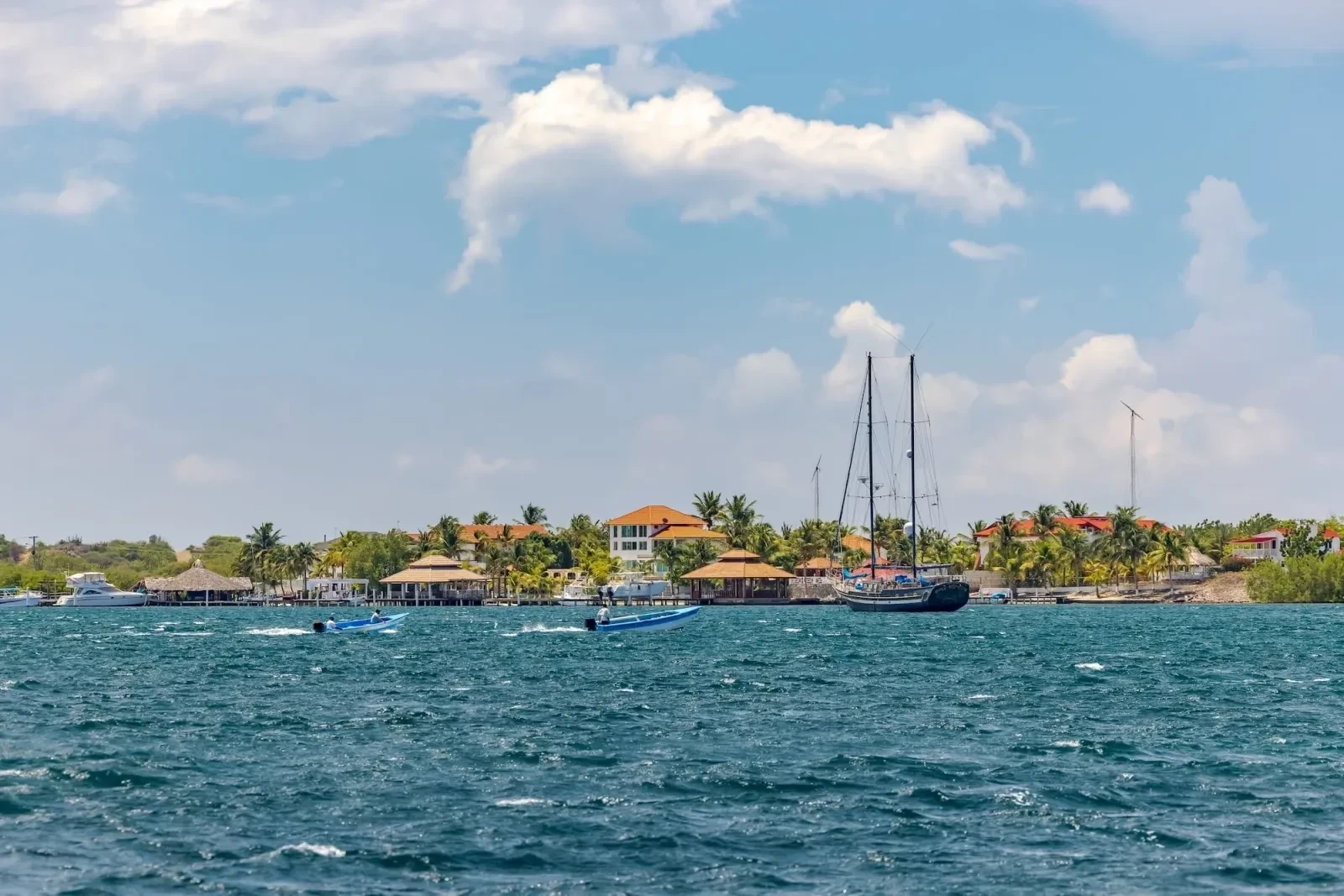
 [ a Larimar shaft · Barahona ]
Pectolite in volcanic host rock
Larimar is a blue variety of pectolite associated with the Dominican Republic. Published research has examined trace elements including vanadium as contributors to colour; this page does not use appearance to establish the identity or origin of an individual piece.
Its host rocks are Cretaceous volcanic basalts, tens of millions of years old; the blue pectolite itself formed much later, as mineral-bearing fluids filled cavities in the ancient rock. Recovery may involve careful hand tools before cleaning and assessment.
Watch · Episode 1 New
The Only Larimar Deposit on Earth: Hand-Dug, Deep Underground
Chapters, sources and notes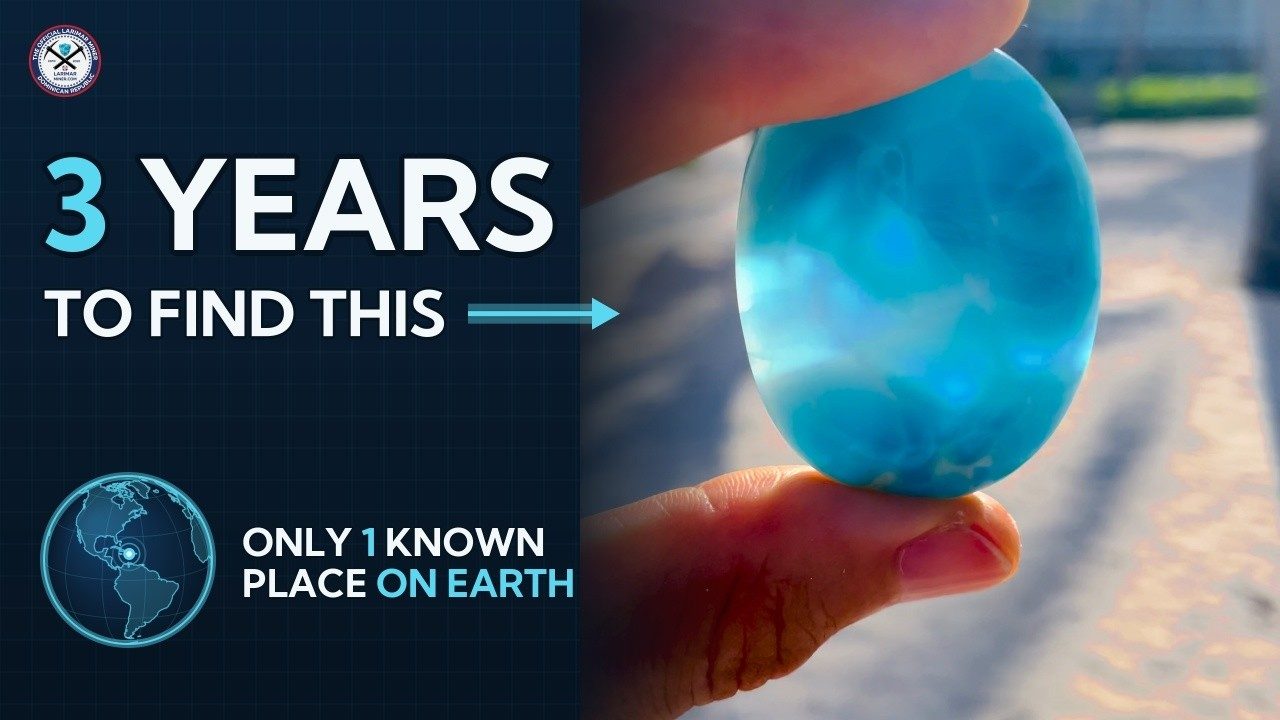
Hand-dug, deep, and far from guaranteed
Some workings extend roughly 300–900 ft (100–300 m) below the surface and may be worked by teams using hand tools. Conditions and methods vary, and recovery is never guaranteed.
Safe access, ventilation, drainage and ground support require local expertise and continuous site-specific assessment.
From volcanic host rock to a documented Larimar specimen
Larimar recovery is a sequence of geological observation, careful excavation and record keeping. Conditions and methods vary by working, so these steps describe a general process rather than any named site.
Observe
Workers follow changes in volcanic host rock and mineralized cavities. Visual indicators guide work but do not guarantee a recoverable vein.
Recover
Material is separated with hand tools where practical. Fragile pectolite, host rock and inclusions are kept intact for later cleaning and assessment.
Record
After cleaning, material can be weighed, photographed and described. Only information actually recorded belongs in a specimen’s provenance file.
Underground work is specialist work
Conditions inside a working can change quickly. Access belongs under qualified local direction and a site-specific safety plan.
Contact Larimar Miner
Talk directly with the people behind the stone.
For personal help with a specimen, a purchase, or Larimar in general, start a private conversation here on our website.