Published gemological account Official regulation Documented field observation
How Larimar is mined
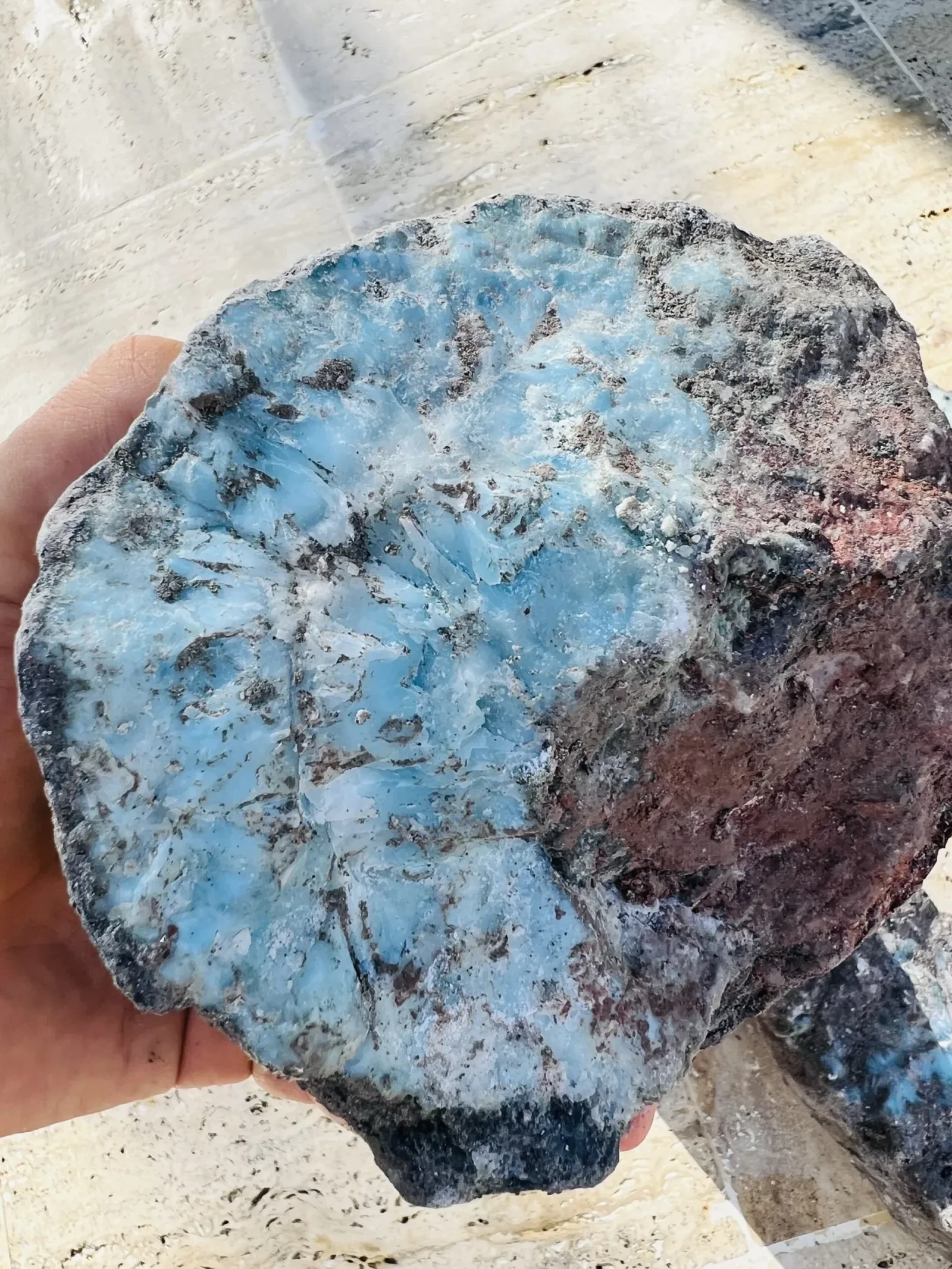
Larimar occurs in a mountainous area of Barahona Province within altered volcanic rocks. The gem material fills or partly fills cavities, veins and mineralized structures rather than forming a broad, predictable layer of uniform blue stone.
That geological irregularity shapes the mining. Workers must follow evidence in the rock, manage changing ground conditions and separate potentially useful material from host rock and waste. Historical and modern operations have used shafts, tunnels and manual extraction methods adapted to the terrain and scale of the deposit.
Watch · Episode 1 New
The Only Larimar Deposit on Earth: Hand-Dug, Deep Underground
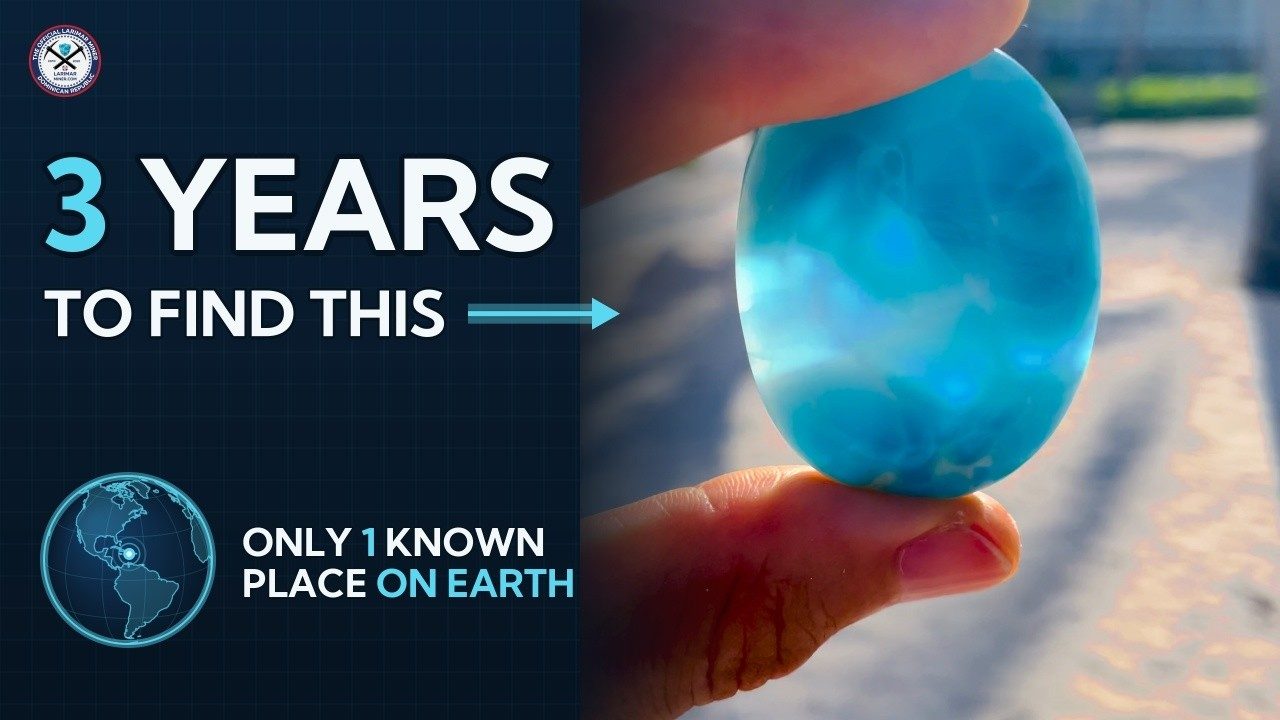
1. Reading the ground
Mining begins with geological and practical evidence:
- Known mineralized structures
- Pectolite-bearing cavities or veins
- Alteration in the host rock
- Material recovered from existing workings
- Continuity, direction and condition of exposed structures
A promising blue fragment does not reveal the size or direction of the deposit by itself. Mineralization can narrow, branch, change color or end abruptly.
2. Establishing access
Access may involve a shaft, inclined entry or underground working connected to an existing operation. The design must consider:
- Competence of the rock
- Ground support
- Safe entry and exit
- Removal of material
- Water
- Ventilation
- Lighting and communication
- Emergency response
3. Supporting the excavation
Loose or fractured ground must be assessed and supported appropriately. Timber, structural elements and excavation geometry have historically been part of Larimar mining, but exact methods vary by working and must be described from current verified practice.
No photograph should romanticize an unsafe condition. If a historical image shows obsolete practice, label the date and context.
4. Ventilation, water and working conditions
Underground work requires breathable air, heat management, lighting and a plan for water. Rainfall and groundwater can affect access and stability. Pumps, drainage and maintenance may be as important as extraction itself.
5. Extracting mineralized rock
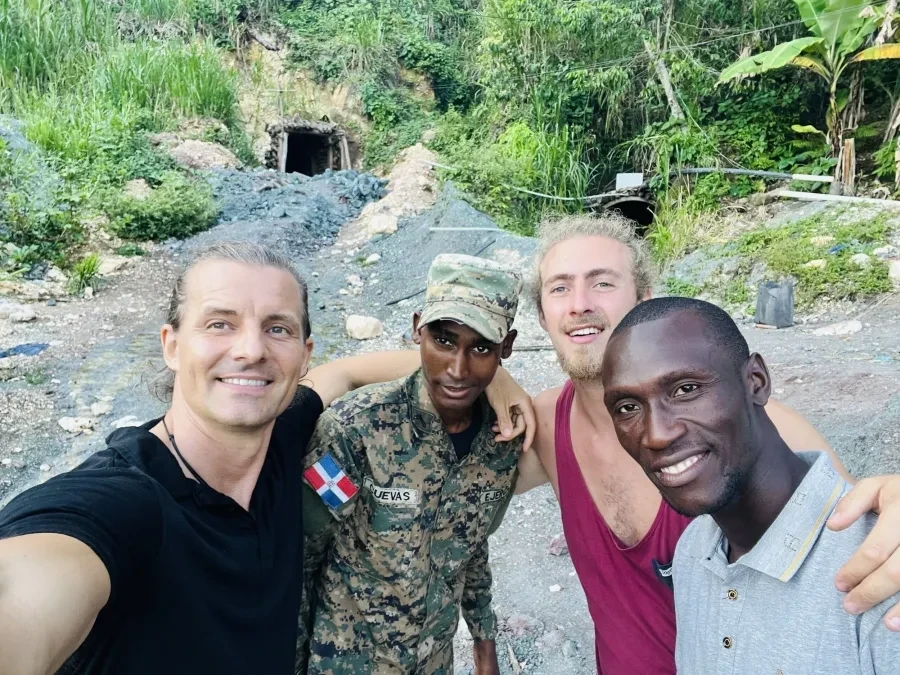
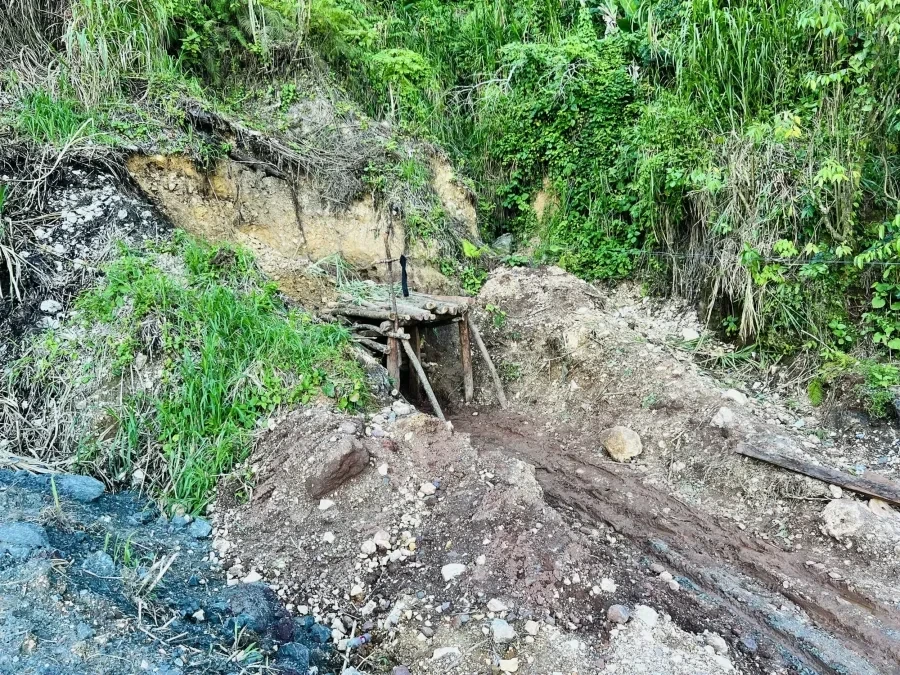
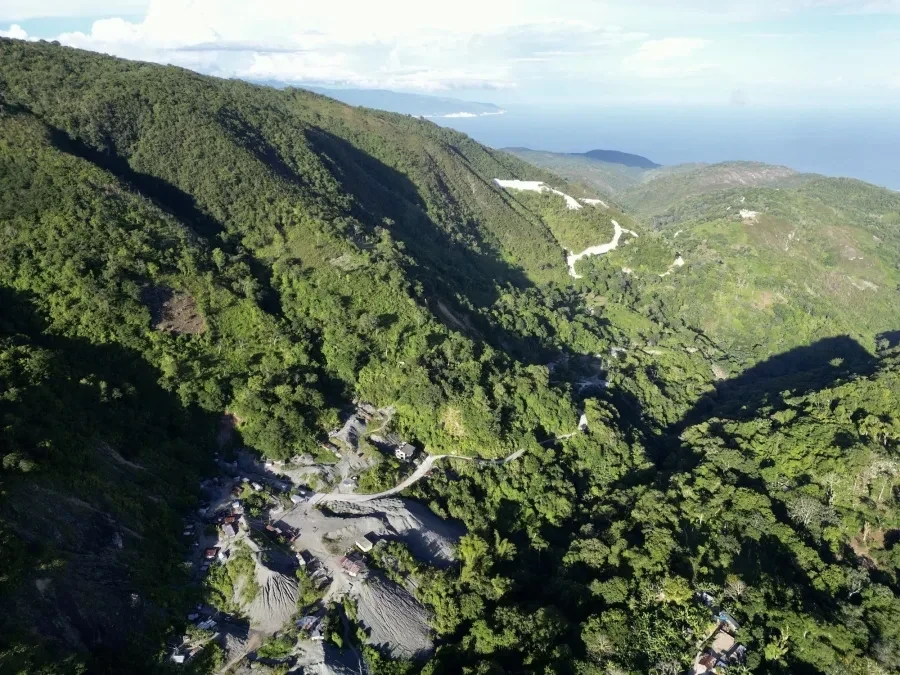
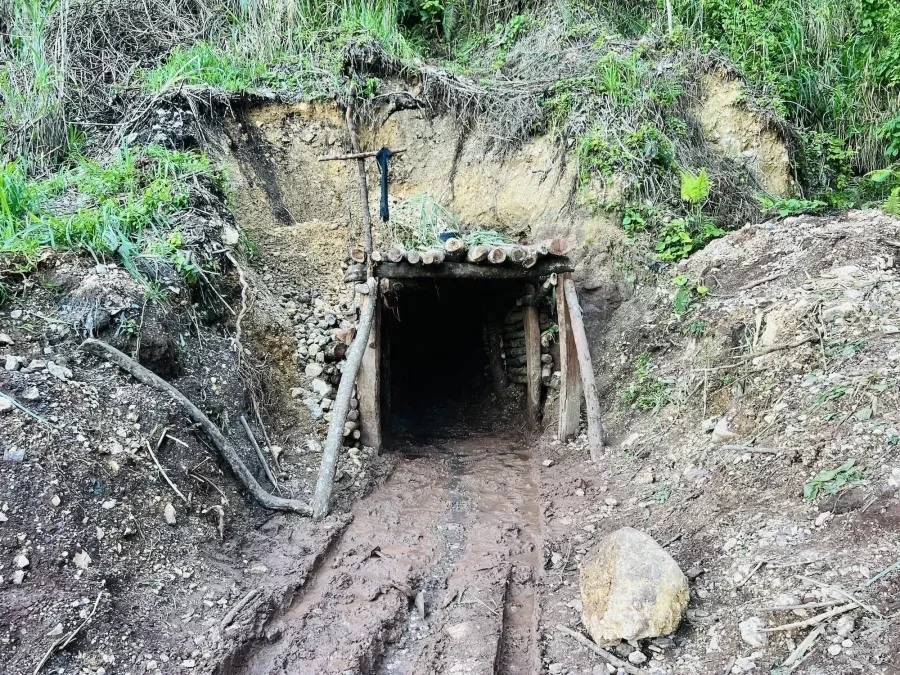
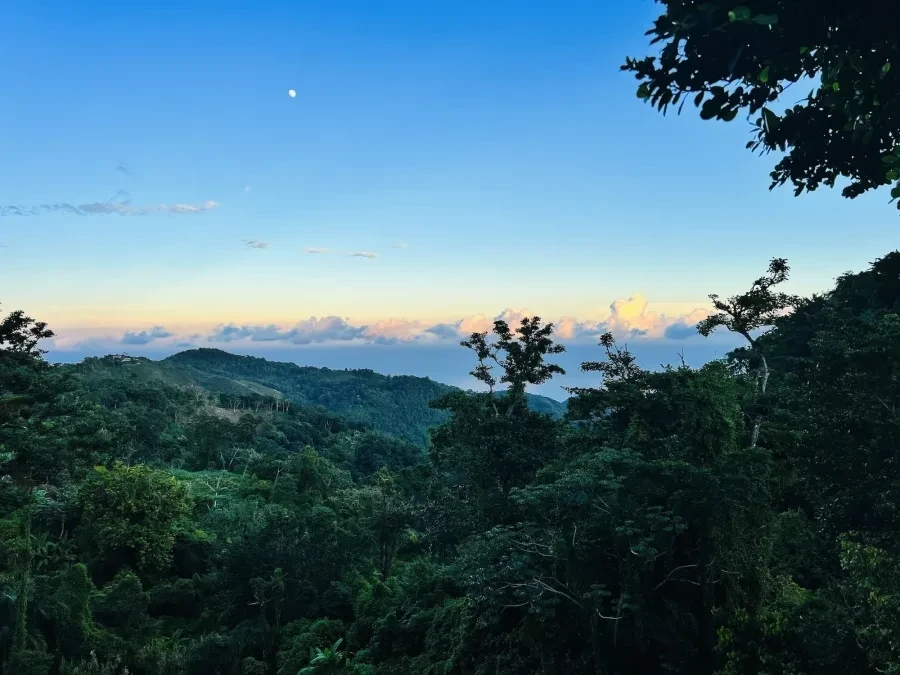
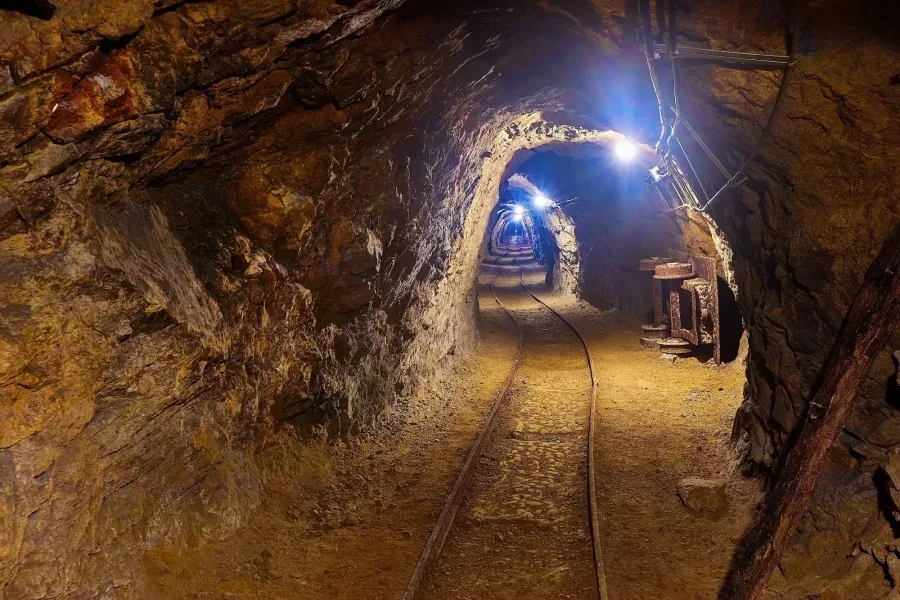
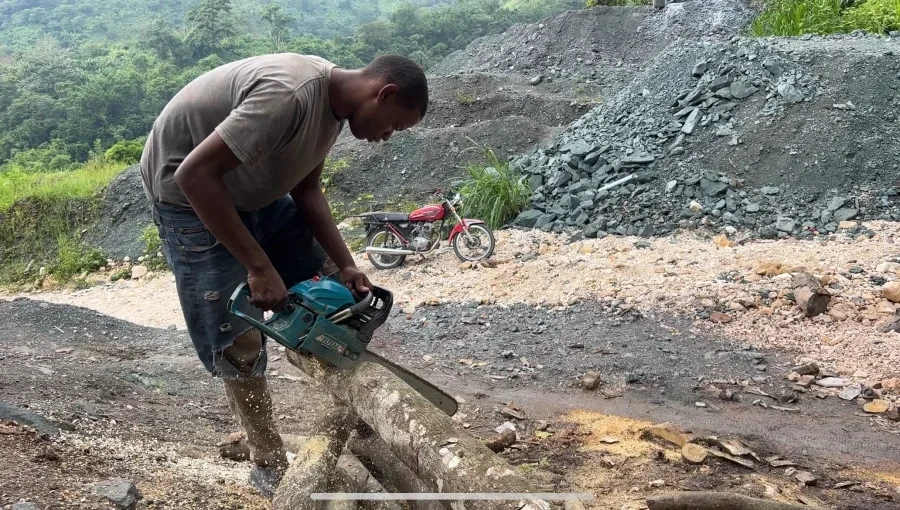
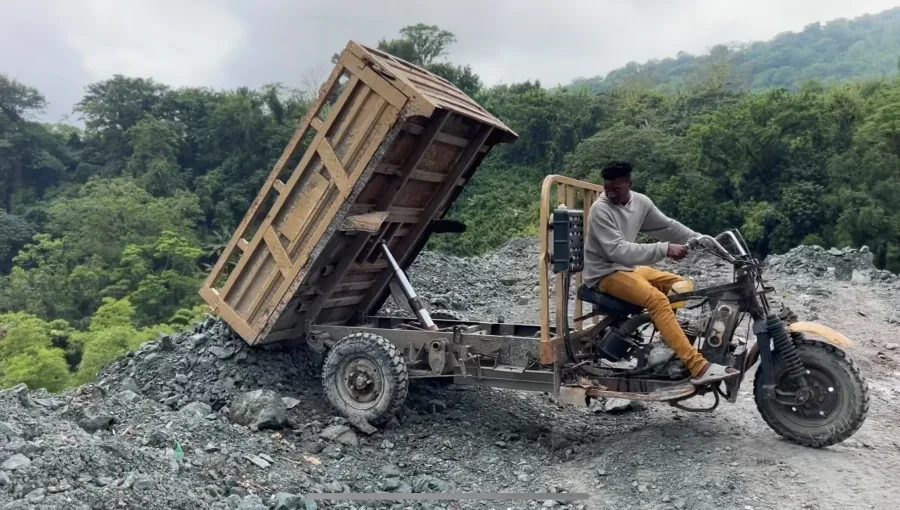
Workers remove host rock and mineralized material using tools appropriate to the conditions. The objective is not simply to break rock quickly; uncontrolled impact can destroy the same material being sought.
Potential Larimar is separated for closer inspection. Large pieces may contain only limited usable blue pectolite, while modest fragments can reveal fine compact material after cleaning or cutting.
6. Initial sorting
Sorting considers:
- Visible pectolite
- Color and pattern
- Matrix
- Fractures
- Size
- Potential cutting orientation
- Unusual associated minerals
- Specimen value versus cutting value
Material deserving scientific or specimen documentation should be recorded before it is cut. A saw is an excellent production tool and a rather irreversible research assistant.
7. Transport and processing
Selected material leaves the working area for washing, detailed sorting, documentation and lapidary evaluation. Legal requirements governing extraction, transport, processing and export should be checked against current Dominican rules and certifications.
Why mining output varies
Production can change because of geology, access, maintenance, water, safety work, labour, equipment and the simple fact that the deposit is not a warehouse shelf. Short-term output should not be used to promise future quantity or quality.
What this page does not claim
This is a general overview. It does not establish:
- That every Larimar mine uses the same method
- That every blue-bearing structure continues
- That all extracted material is gem quality
- That a photographed working represents current conditions
- That mining is risk-free
Sources and further reading
- Woodruff, Robert E.; Fritsch, Emmanuel. “Blue Pectolite from the Dominican Republic.” *Gems & Gemology*, Winter 1989, vol. 25, no. 4, pp. 216–225. — link
- Dumańska-Słowik, Magdalena; Powolny, Tomasz; Milovský, Rastislav; Natkaniec-Nowak, Lucyna; George, Carlos; Lora, Eudalislao; Quezada, Daniel; Surmacki, Jakub. “Origin of bluish pectolite aka larimar from the Dominican Republic: Constraints from mineralogy and geochemistry.” *Journal of South American Earth Sciences*, vol. 141, 2024, article 104949. — link
- Dominican Republic, Decree No. 370-19, Regulation for the Extraction of Amber and Larimar, dated 25 October 2019 and published in Official Gazette No. 10959 on 12 November 2019. — link
- Dominican Ministry of Energy and Mines, “Emisión de certificación de NO objeción para exportación de ámbar y larimar.” — link