Gemological reference Trade practice
Genuine Larimar and common look-alikes
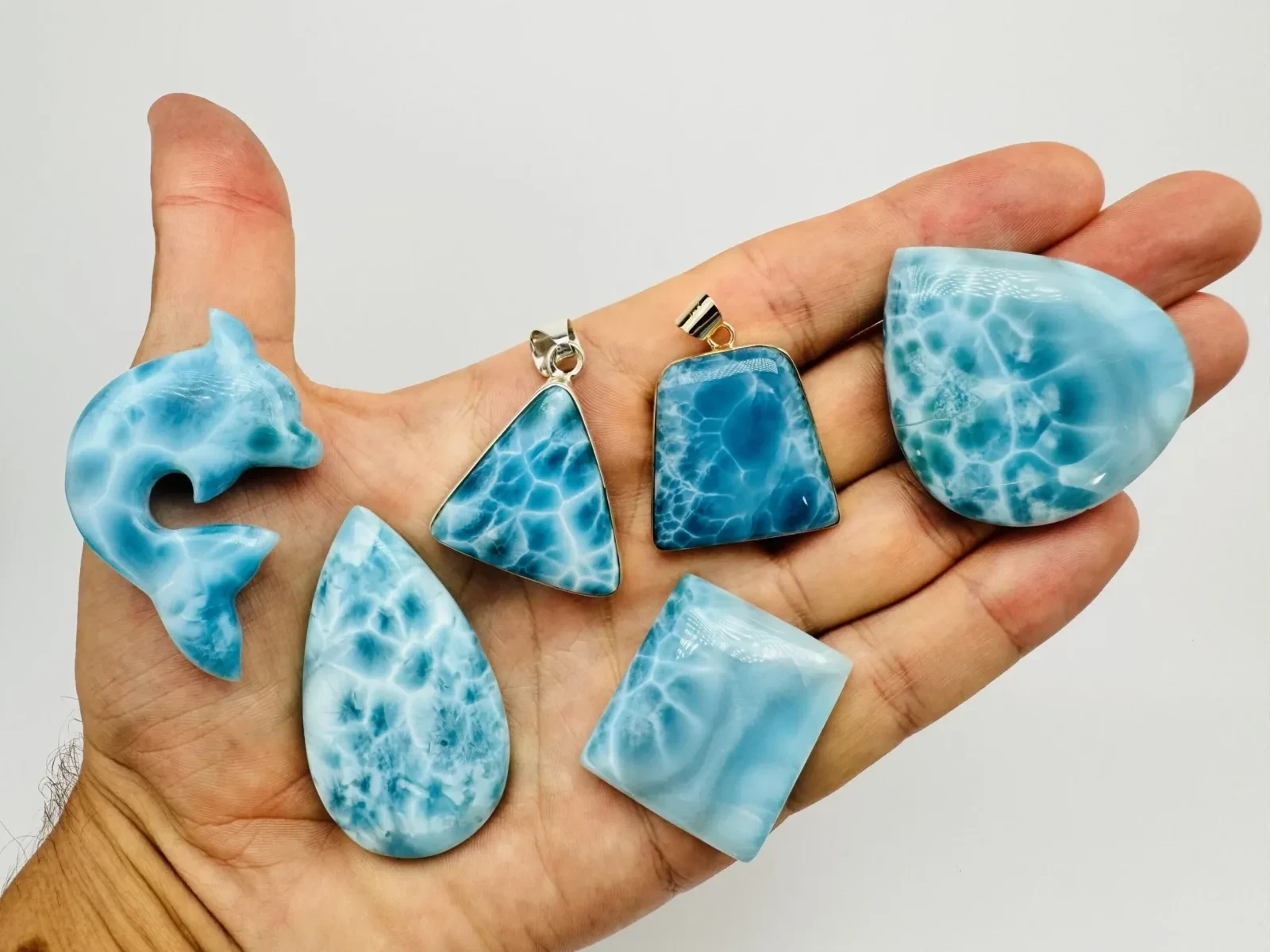
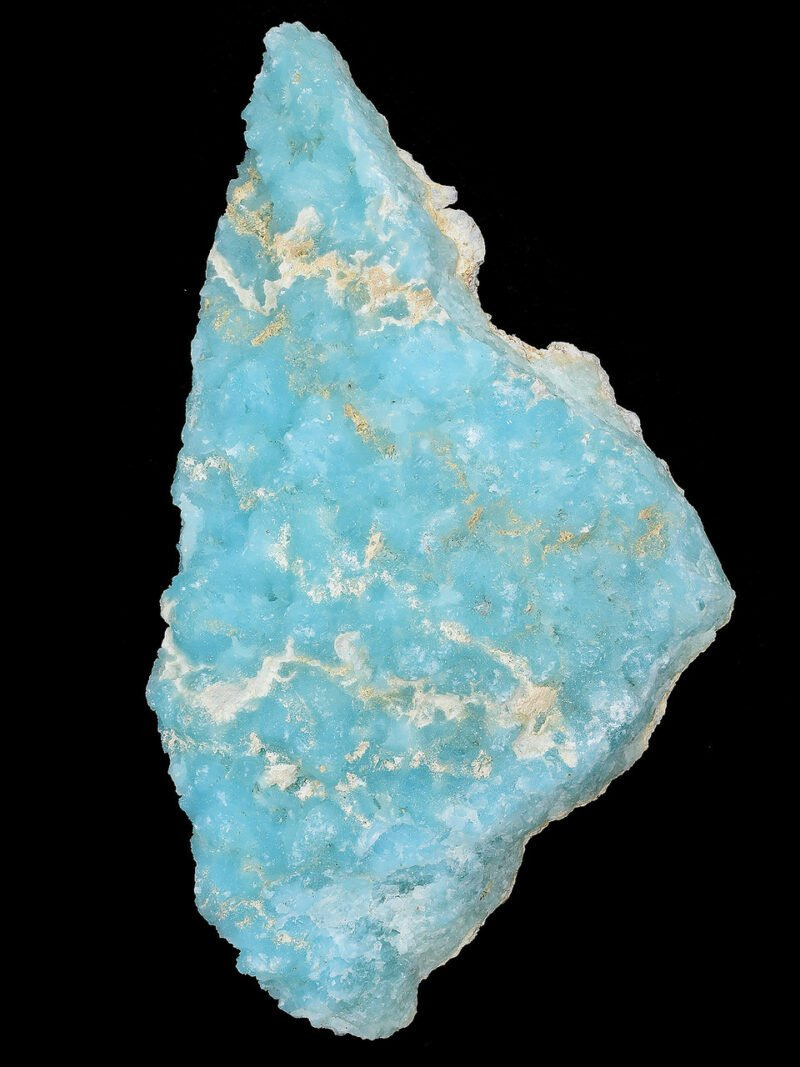
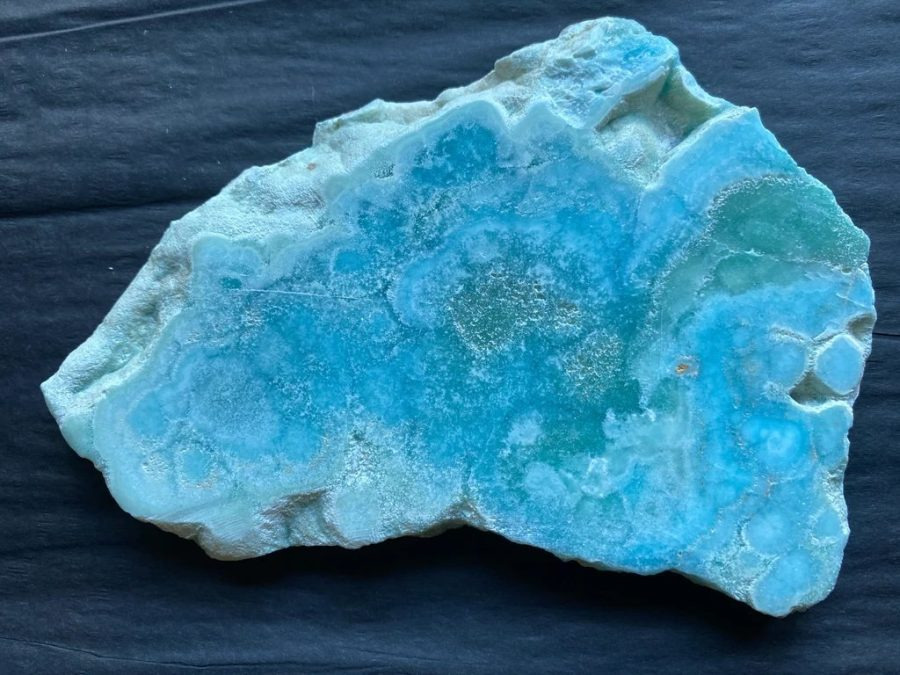
Genuine Larimar is Dominican blue to blue-green gem-quality pectolite. Its appearance can be distinctive, but natural variation is broad enough that visual recognition should be treated as a first assessment—not a laboratory verdict.
A familiar white-on-blue pattern can occur in genuine Larimar, yet not every genuine piece displays dramatic “waves.” Conversely, dyed or reconstructed materials can imitate blue-and-white contrast. The safest conclusion from a photograph is often a probability, not certainty.
Useful visual characteristics
Common characteristics of Larimar may include:
- Pale blue, sky blue, blue-green, green or saturated blue areas
- White branching, radial, mottled or cloud-like structures
- Translucent edges or zones in suitable material
- Natural fractures, cavities, matrix or associated minerals
- Fibrous or radiating internal growth visible under magnification
- Variation rather than perfectly repeated printed-looking patterns
None of these features is exclusive to Larimar. The absence of one feature also does not automatically disqualify the material.
Common look-alikes and misleading names
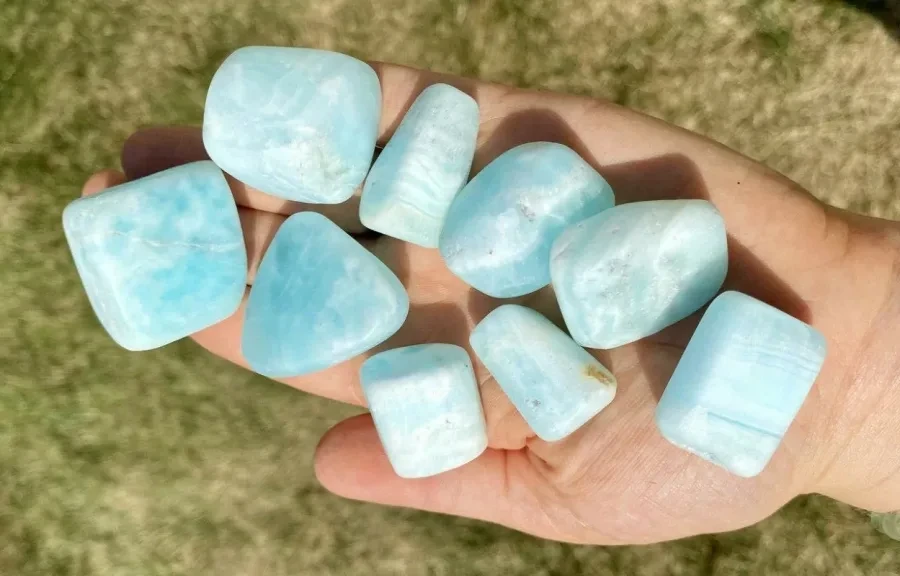
Blue calcite and blue aragonite
Blue carbonate material may be sold under geographic or ocean-themed trade names. It is chemically and structurally different from pectolite and often has different hardness, cleavage, density and optical properties. Color resemblance is not mineral identity.
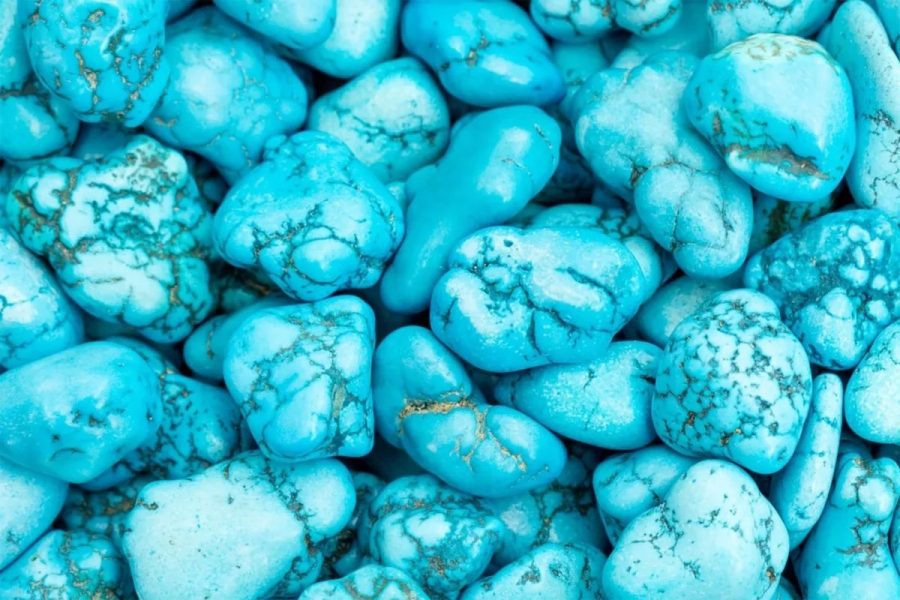
Dyed howlite or magnesite
These porous light-colored minerals accept dye readily. Dark veining and an unnaturally uniform surface color can be warning signs, although visual inspection alone is insufficient.
Dyed or quench-crackled chalcedony
GIA has documented dyed crackled chalcedony beads that resembled Larimar. Microscopy and Raman spectra distinguished the chalcedony from pectolite. This is a useful reminder that convincing color and white fracture networks can be manufactured.
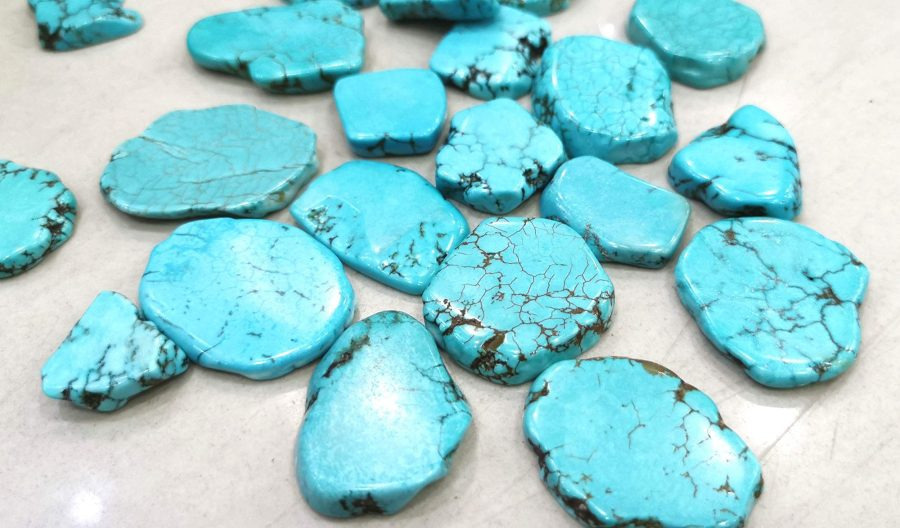
Turquoise, chrysocolla and other blue-green minerals
These materials are genuine minerals in their own right, but they are not Larimar. Some pieces may overlap in color while differing in structure, typical pattern, hardness, density and spectroscopy.
Glass, resin and reconstructed composites
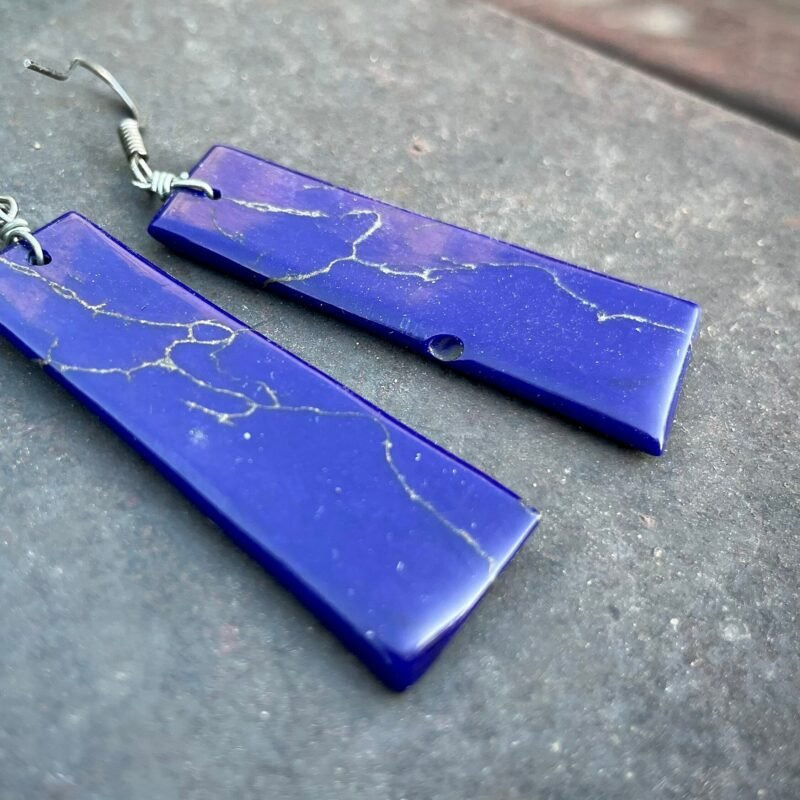
Manufactured imitations may contain bubbles, flow structures, mould marks, repeated patterns or a weight and thermal feel inconsistent with natural stone. None of these observations should replace proper testing when value or attribution matters.
Misleading Larimar-style names
Names such as “pink Larimar,” “Caribbean Larimar” or other color-and-location combinations may be marketing terms applied to unrelated material. Larimar is not a universal synonym for every pastel stone with a beach personality.
Warning signs in a listing
Exercise additional care when:
- The seller refuses to provide weight, dimensions or unedited photographs
- Every stone has the same pattern
- Origin is described vaguely or changes between messages
- A certificate has no issuer, date, specimen number or test method
- The listing guarantees medical effects or investment returns
- Images appear on unrelated websites under different seller names
- The price is justified only by an unexplained “AAAAA+” grade
- Treatments, composites or repairs are not discussed
A low price does not prove imitation, and a high price does not prove authenticity. Price is a commercial decision; mineral identity is a testable question.
What photographs can establish
Good photographs can document color, pattern, polish, visible fractures, dimensions and the condition of a specific piece. They can also reveal inconsistencies between a listing and the object delivered.
Photographs generally cannot establish chemical composition, crystal structure, treatment status or geographic origin by themselves. White balance, exposure, saturation, screen calibration and lighting can all change perceived color.
A practical verification path
- Obtain clear photographs, dimensions and weight.
- Ask for the seller’s origin and treatment disclosure.
- Match the item to a unique invoice, specimen or certificate number.
- Examine the material under magnification.
- Use non-destructive gemological measurements where appropriate.
- For important, disputed or unusual material, obtain an independent laboratory report.
See how Larimar is authenticated
Sources and further reading
- Woodruff, Robert E.; Fritsch, Emmanuel. “Blue Pectolite from the Dominican Republic.” *Gems & Gemology*, Winter 1989, vol. 25, no. 4, pp. 216–225. — link
- Miura, Makoto. “Quench-Crackled Dyed Blue Chalcedony Resembling Larimar.” *Gems & Gemology*, Summer 2020, Lab Notes, pp. 281–282. — link
- Anthony, John W.; Bideaux, Richard A.; Bladh, Kenneth W.; Nichols, Monte C., eds. “Pectolite.” *Handbook of Mineralogy*, Mineral Data Publishing / Mineralogical Society of America, version 1.2. — link