How to buy Larimar
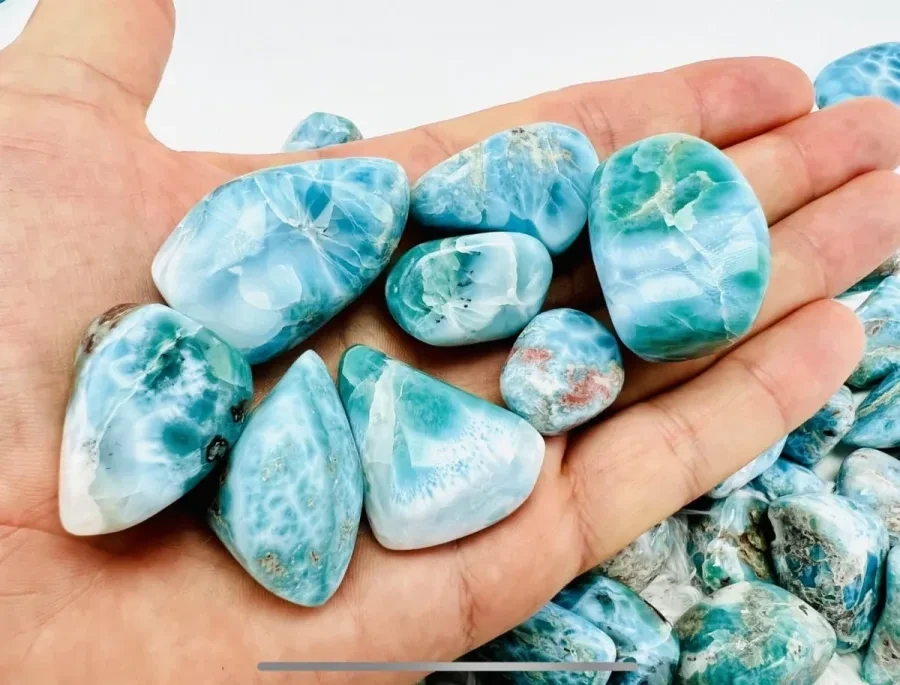
Buying Larimar becomes much easier when the listing describes the actual object rather than only the seller’s enthusiasm. Begin with identity and condition, then consider beauty, workmanship, documentation and price.
Ten questions worth asking
- Is this the exact piece I will receive?
- What are its weight and dimensions?
- Is the stated weight for the stone alone or the complete jewellery item?
- What evidence supports Dominican origin?
- Has the material been dyed, filled, stabilized, coated, repaired or reconstructed?
- Are the photographs edited, and under what lighting were they taken?
- Which fractures, pits, matrix areas or structural risks are present?
- What does the seller’s grade mean?
- What metal, purity and setting method are used?
- What are the return, shipping and customs terms?
A responsible seller should be able to answer these questions without treating curiosity as an attempted coup.
Buying rough Larimar
Rough material can be rewarding and unpredictable. The visible surface may not represent the interior, and water can temporarily intensify color and contrast.
Request:
- Dry and wet photographs clearly labelled
- Weight and dimensions
- Multiple sides
- Information about rind, matrix and fractures
- Whether the piece has been sawn or tested
- Any known source documentation
- A clear statement that internal yield is uncertain
Do not calculate finished yield from one attractive wet face alone. Saw loss, fractures, matrix, shape and design choices all matter.
Buying slabs and preforms
Check:
- Thickness across the whole piece
- Flatness
- Surface-reaching fractures
- Undercut minerals
- Whether both faces are shown
- Whether the slab has been resin-coated for photography
- Orientation of the intended cabochon or carving
A ruler next to the slab is useful; exact measurements are better. Perspective has sold many surprisingly small stones.
Buying cabochons and loose polished stones
Ask for:
- Length, width, depth and weight
- Front, back and side views
- Dome height and symmetry
- Girdle condition
- Polish quality
- Open fractures or pits
- Treatment disclosure
The back matters. A beautiful front can coexist with a weak, undercut or repaired reverse.
Buying Larimar jewellery
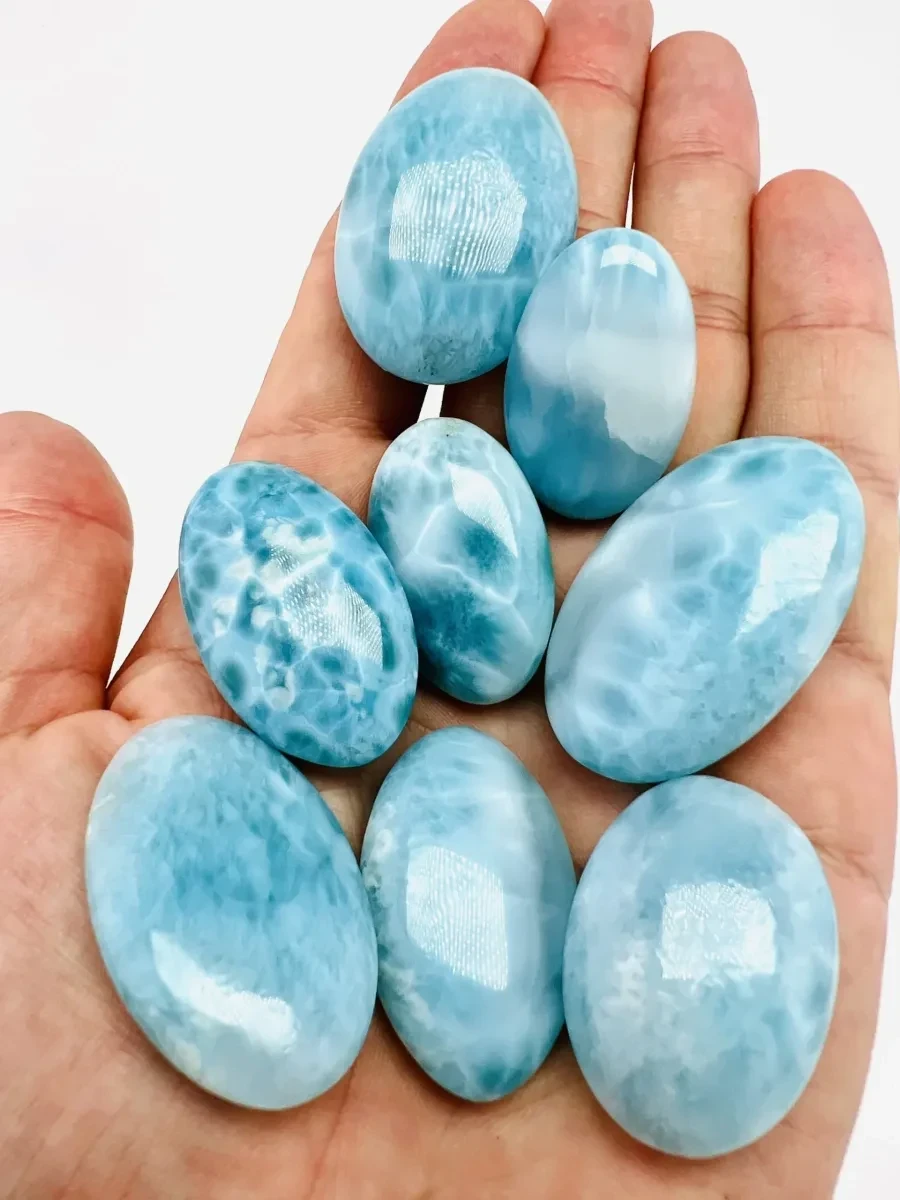
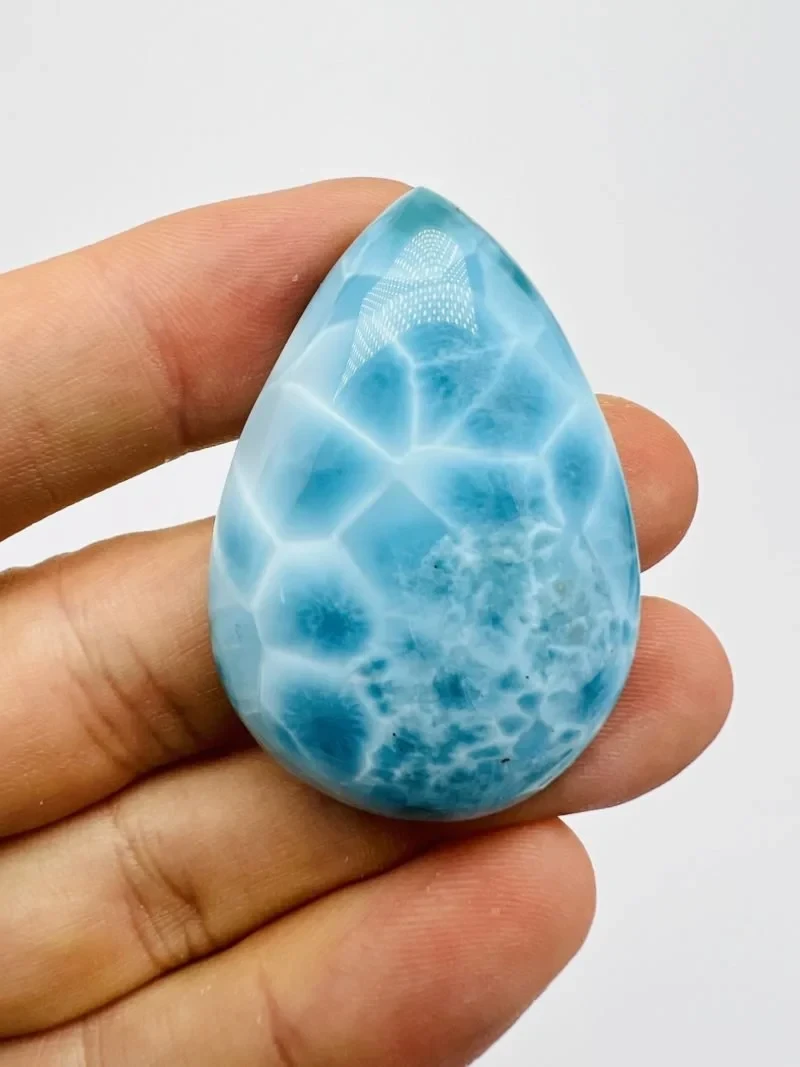
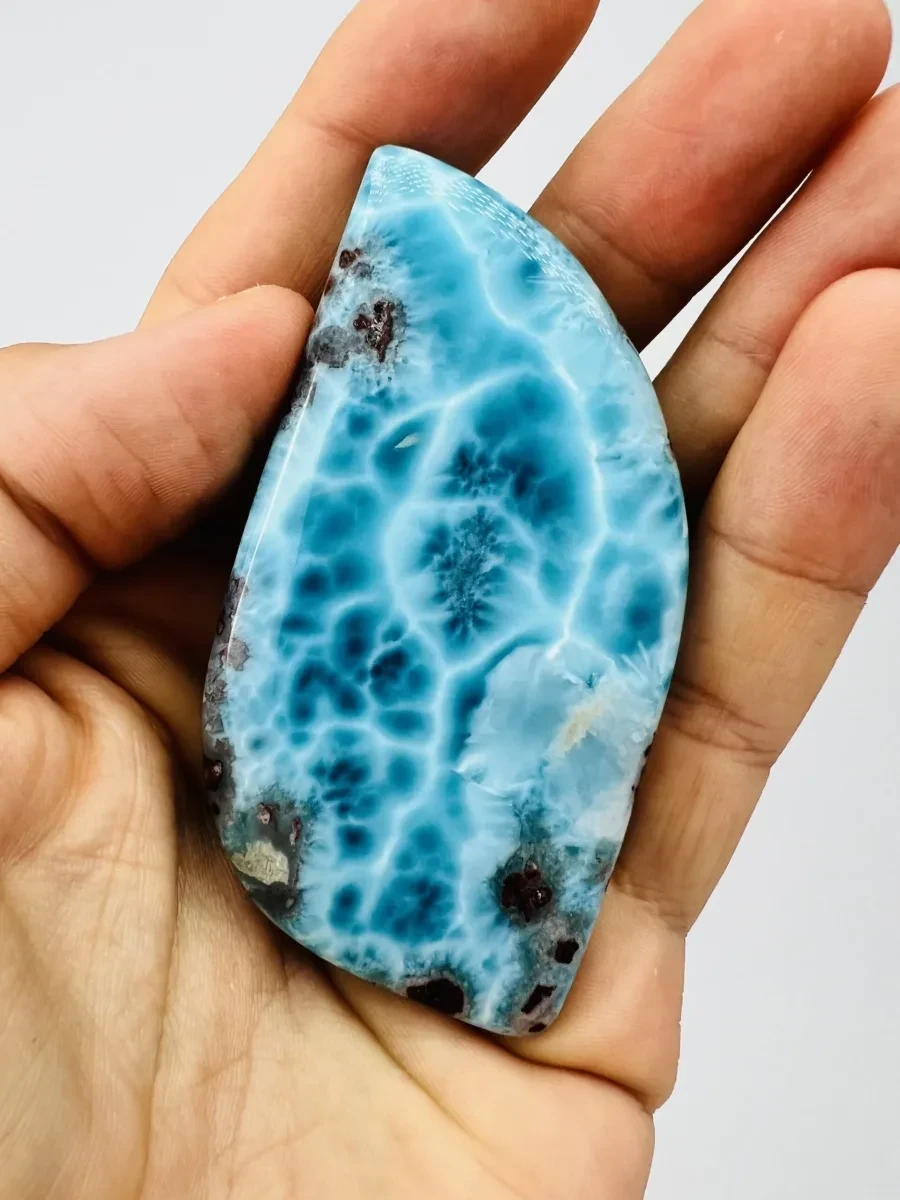
In addition to the stone, verify:
- Metal and fineness, such as sterling silver or stated gold alloy
- Total weight versus stone weight
- Setting method
- Bail and chain dimensions
- Ring size
- Earring findings
- Nickel or other relevant material disclosures where required
- Repair and care limitations
For rings and bracelets, consider how exposed the stone will be. Pectolite’s hardness and natural fractures make impact protection important.
Buying collector specimens
Documentation becomes more important as rarity and price increase. Seek:
- Unique specimen number
- Scale photographs
- Weight and dimensions
- Provenance history
- Extraction or acquisition date where known
- General source area, where it can be disclosed safely and lawfully
- Mineral identification
- Associated-mineral description
- Repairs, adhesives and restoration disclosure
- Independent report for exceptional or disputed material
Understanding grades
Do not compare grades across sellers without comparing criteria. One seller’s AAA may overlap another seller’s AA or “premium.” Look for a published system with reference photographs, lighting rules and defect disclosures.
Color is important, but not alone. Pattern, integrity, translucency, form, workmanship and provenance all influence the object.
Photography and color
Request images in neutral light and, for expensive pieces, a short video showing movement. Be cautious with:
- Extreme saturation
- Very cool white balance
- Deep shadows hiding fractures
- Wet rough shown without disclosure
- Backgrounds that reflect blue into the object
- One image used for a lot of non-identical products
No online photograph can make every monitor agree. The aim is accurate documentation, not a tropical weather filter.
Price and pressure
Avoid pressure built around unverifiable claims: guaranteed appreciation, miraculous rarity, secret official grades or an emergency that somehow expires in seven minutes.
A fair purchase is one where the object, documentation, price and terms are clear enough that both sides understand the exchange.