Official or archival record Peer-reviewed research
The history of Larimar
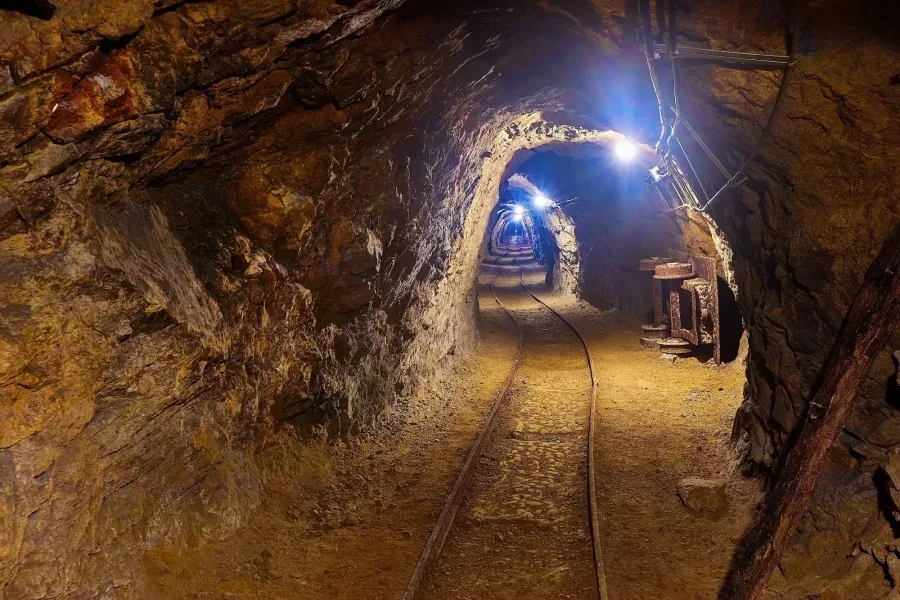
Larimar’s geological history is ancient compared with its public history. The stone became internationally known only in the late twentieth century, but a documented Dominican record reaches back to 1916.
1916: the earliest official record
Dominican Law 17-18 cites research by Dominican geologists concerning a communication dated 22 November 1916. In it, the priest Miguel Domingo Fuertes informed Archbishop Alejandro Adolfo Nouel of a stone with blue-green inclusions found along the Bahoruco River.
This record matters because it establishes awareness of the material decades before the modern Larimar trade. It does not mean that an organized industry immediately followed. The stone remained largely outside formal gemological recognition for many years.
1974: rediscovery and identification
The modern history begins in 1974. Dominican law attributes the rediscovery to Miguel Méndez, who collected samples with support from United States Peace Corps personnel. Gemological literature widely associates Peace Corps volunteer Norman Rilling with the search and identification effort.
Accounts differ in some personal details, and older retellings often present anecdote as settled archive. The firm points are that samples collected in the Barahona area were examined, identified as pectolite and linked to the inland source after waterworn material had been found downstream and near the coast.
The name Larimar
The accepted explanation is that Miguel Méndez formed the name from Larissa, the name of his daughter, and mar, the Spanish word for sea. The name captures the visual resemblance between polished blue Larimar and Caribbean water, but the stone itself formed in the mountains—not in the sea.
From local material to recognized gem
By the mid-1970s, blue pectolite had begun appearing in jewellery in Santo Domingo. Mining and lapidary activity expanded, and the material reached international gem and mineral markets. A detailed 1989 article in Gems & Gemology reviewed the deposit, mining, chemistry, gemological properties and early trade.
The methods and scientific explanations of that period should be read in historical context. Mining practices evolved, and later analytical studies revised parts of the early color story.
2011: National Stone of the Dominican Republic
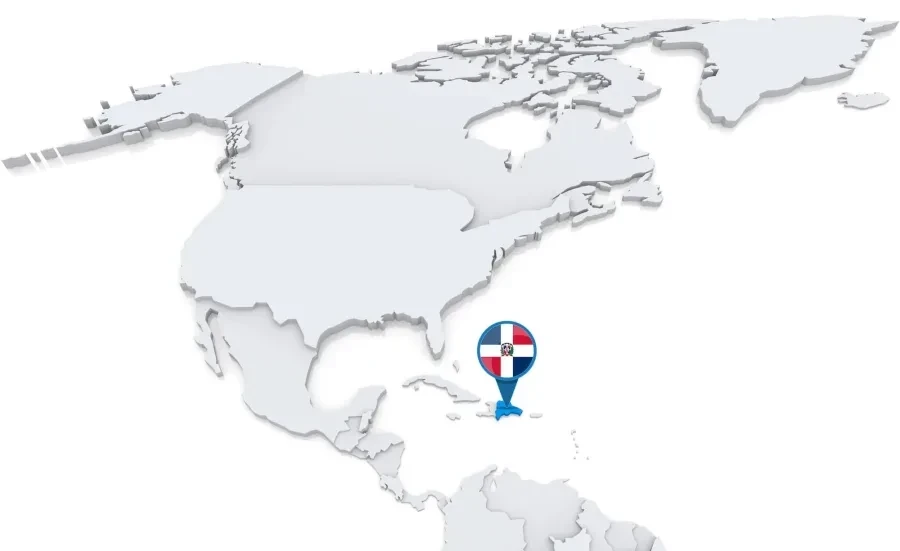
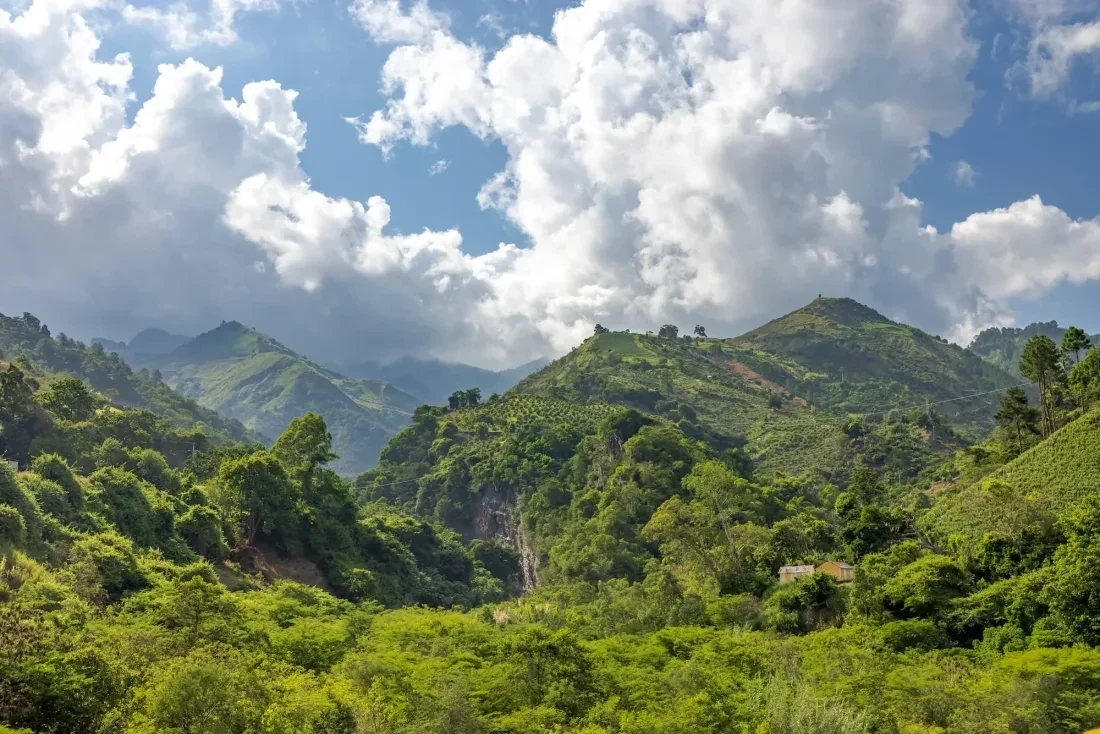
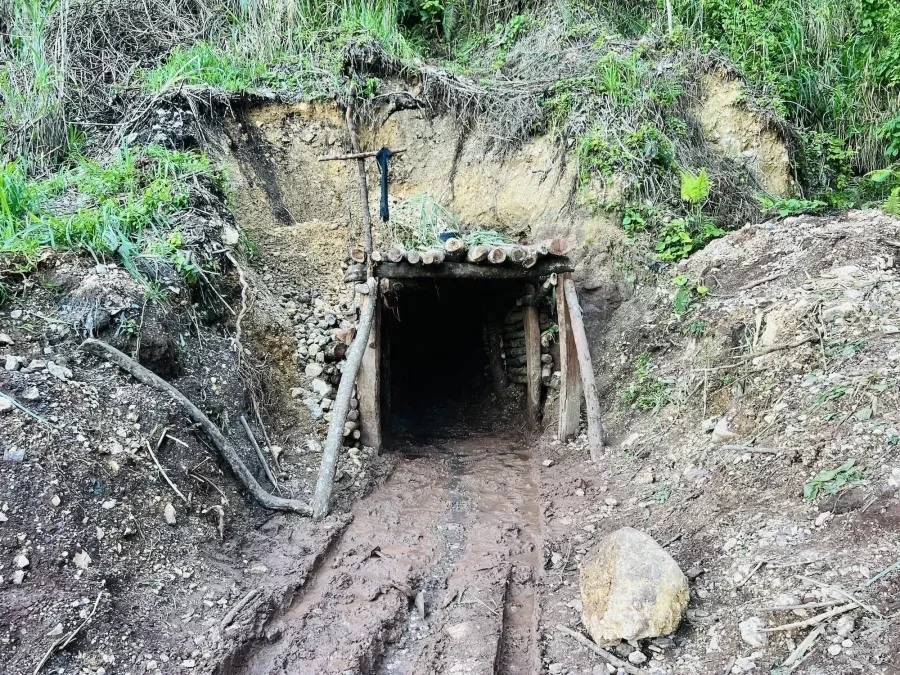
Law 296-11 designated Larimar the National Stone of the Dominican Republic. The law recognized the gem’s unique association with the country and directed public institutions to promote knowledge of it nationally and internationally.
This status is cultural and legal. It is not a laboratory certificate for every object sold under the name Larimar.
2018: National Larimar Day
Law 17-18 established 22 November as National Larimar Day, choosing the date associated with Miguel Domingo Fuertes’s 1916 communication. The law connects Larimar with Dominican identity, cultural heritage, the communities of Barahona and the development of local craft.
2025: international registration of “Larimar Barahona”
In 2025, Dominican authorities announced the international registration of the denomination of origin Larimar Barahona under the Lisbon System administered by the World Intellectual Property Organization. The registration strengthens the geographic and cultural association between the name and its Dominican origin in participating jurisdictions.
A denomination of origin does not remove the need for product-level traceability. It protects a geographic name and defined origin framework; it does not make every online certificate or blue stone automatically genuine.
A history still being written
Larimar’s modern history includes miners, land and concession arrangements, cooperatives, artisans, lapidaries, jewellery makers, traders, researchers and communities across Barahona and the Dominican Republic. No responsible account should reduce that history to the discovery story alone.
Our Research Library will continue to add documented interviews, archival material, field observations and dated industry developments. Where accounts disagree, we will show the disagreement and identify the source rather than sanding history until every edge disappears.
Timeline
- 22 November 1916: Miguel Domingo Fuertes reports blue-green stone from the Bahoruco River area.
- 1974: Miguel Méndez, with Peace Corps support, collects and submits material associated with the modern rediscovery.
- Mid-1970s: Larimar begins appearing in Dominican jewellery and commercial mining develops.
- 1989: Gems & Gemology publishes a major early technical review of Dominican blue pectolite.
- 2011: Law 296-11 designates Larimar the National Stone.
- 2018: Law 17-18 creates National Larimar Day on 22 November.
- 2025: Dominican authorities announce international registration of the denomination of origin Larimar Barahona.
Sources and further reading
- Dominican Republic, Law No. 17-18, declaring 22 November of each year the National Day of Larimar; Official Gazette No. 10909, 23 April 2018. — link
- Dominican Republic, Law No. 296-11, designating Larimar as the National Stone of the Dominican Republic; Official Gazette No. 10647, 16 November 2011. — link
- Woodruff, Robert E.; Fritsch, Emmanuel. “Blue Pectolite from the Dominican Republic.” *Gems & Gemology*, Winter 1989, vol. 25, no. 4, pp. 216–225. — link
- Dominican Ministry of Energy and Mines, “Ministro Joel Santos recibe Registro Internacional de la Denominación de Origen del Larimar Barahona,” 23 July 2025. — link
- Huang, Hao-Ming; Shih, Yu-Hong; Chen, Huei-Fen; Lee, Hao-Yang; Fang, Jiann-Neng; Shen, Chuan-Chou; Yu, Bing-Sheng. “Revealing the Secrets behind the Color and Sea-Wave Patterns of Larimar.” *Minerals*, vol. 13, no. 9, 2023, article 1221. — link
- WIPO Lisbon System bulletin/registration record for “Larimar Barahona,” 2025. — link
Keep exploring Open all 12 lessons 0/12 visited
- Lesson 01 What is Larimar?
- Lesson 02 The history of Larimar
- Lesson 03 Larimar geology and formation
- Lesson 04 Larimar mineralogy and physical properties
- Lesson 05 Why is Larimar blue?
- Lesson 06 Larimar patterns, inclusions and associated minerals
- Lesson 07 How to care for Larimar
- Lesson 08 Larimar and the Dominican Republic
- Lesson 09 Larimar symbolism and spiritual traditions
- Lesson 10 Larimar FAQ
- Lesson 11 Larimar glossary
- Lesson 12 How to read a Larimar specimen